
2025 was a defining year for us. We launched Riley’s enterprise offering in July, and within four months turned multiple enterprise pilots into multi-year contracts across CPG, fintech, real estate, and travel.
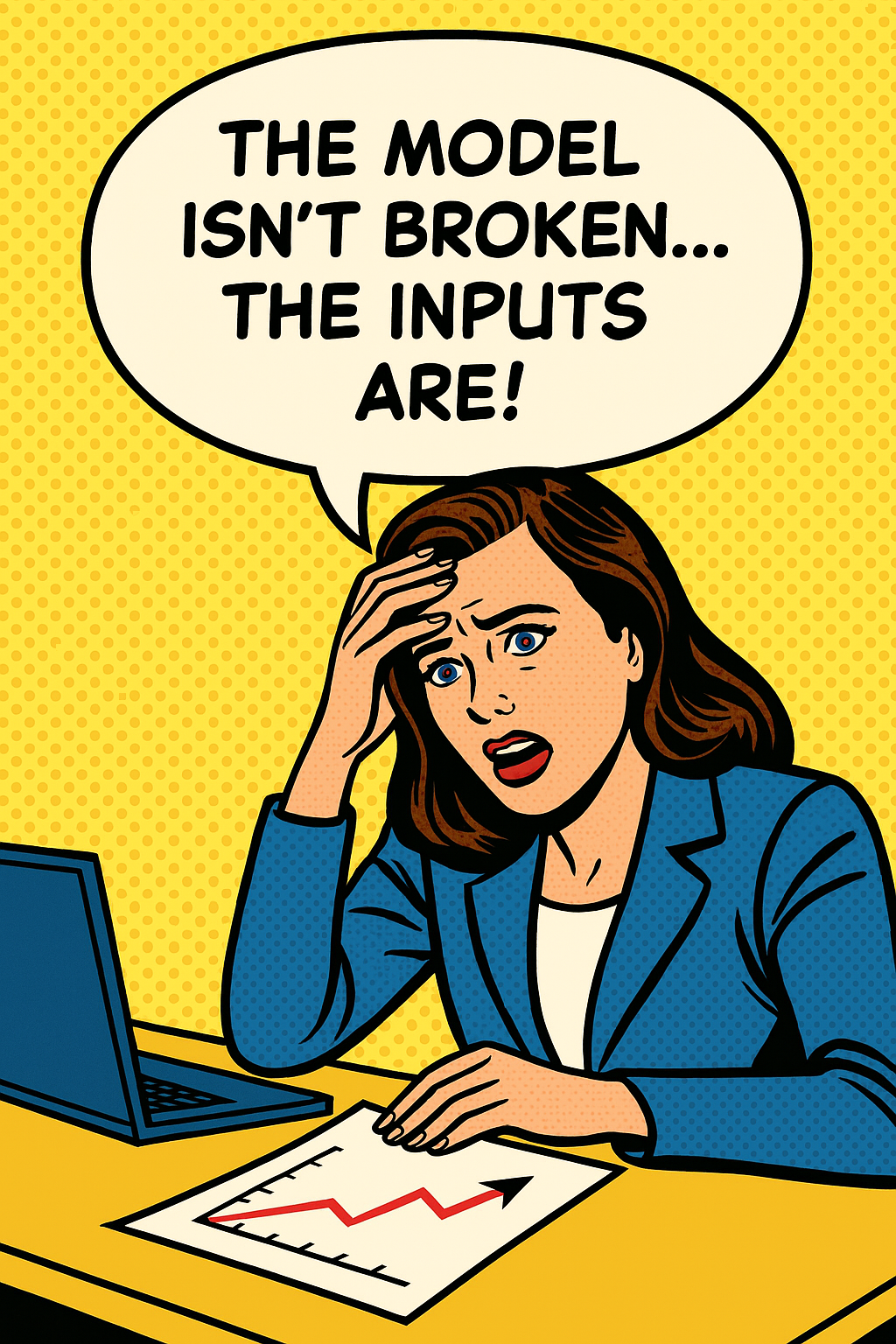
As we’ve helped these teams improve their forecasting and planning motions, one pattern became clear: revenue planning rarely fails because of the model - it fails because of the inputs.
Most teams forecast on whatever data is easiest to access like CRM fields, exports, summaries, without realizing those inputs are incomplete, duplicative, or mislabeled. In my experience, if the base layer is messy, your forecast is already wrong.
We actually run Riley on our own data to clean, standardize, and orchestrate every signal (sales, product usage, sentiment, distribution) into a single semantic layer before modeling anything.
Clean data → earlier signals → more proactive decisions → far more predictable forecasting.

Your wedge isn’t always your product. It’s often the non-obvious signal you detect before anyone else - the thing your competitors don’t even know is worth tracking.
This year, one of our wedges came from seeing how fragmented customer data actually was inside large companies. We often talk about how fragmented data is but there is no single tool that fixes the problem of orchestration accurately first. Everyone tries to solve analysis. The moment we solved orchestration + analysis together, adoption accelerated.
Forecasting improves dramatically when you spend time understanding your wedge and building your strategies around this wedge.
Three ways you can find your wedge:
Your wedge isn’t the feature they praise in the demo; it’s the uncomfortable workflow, workaround, or manual step they repeat every week that no one else is solving.
If 10 people hack the same process on spreadsheets or Slack threads, that’s your wedge, not the thing competitors showcase in their decks.
A true wedge is the part of the product that lands instantly: the moment where the customer says, “Oh, that should have worked like this all along.”
If you need a long explanation, it’s not your wedge. If it hits in 30 seconds, that’s your wedge and it will pull the rest of the product through procurement.
Most teams keep recycling the same narrow inputs—call transcripts, pipeline fields, manual tags, NPS reports, investor-style dashboards.
If you’re reading the same reports as everyone else, you’ll make the same decisions as everyone else.
But the real predictors live outside those systems:
• climate patterns
• regional distribution %
• competitor promotions
• sentiment velocity
• product usage anomalies
• SKU-level shifts
• operational signals no one tracks
These are the signals that reveal what customers will do, not what they say they’ll do.
Forecasting in 2026 won’t be about prettier dashboards — it will depend on cleaner data, unconventional signals, and a precise understanding of how customers actually behave. Teams that anchor on these inputs will out-forecast and out-execute everyone else. It’s the approach we’ve taken at Riley, and it’s the reason our customers have been able to move from fragmented data to multi-brand deployment in just a few months.
Claudia is the CEO & Co-Founder of Riley AI. Prior to founding Riley AI, Claudia led product, research, and data science teams across the Enterprise and Financial Technology space. Her product strategies led to a $5B total valuation, a successful international acquisition, and scaled organizations to multi-million dollars in revenue. Claudia is passionate about making data-driven strategies collaborative and accessible to every single organization. Claudia completed her MBA and Bachelor degrees at the University of California, Berkeley.